

 русский


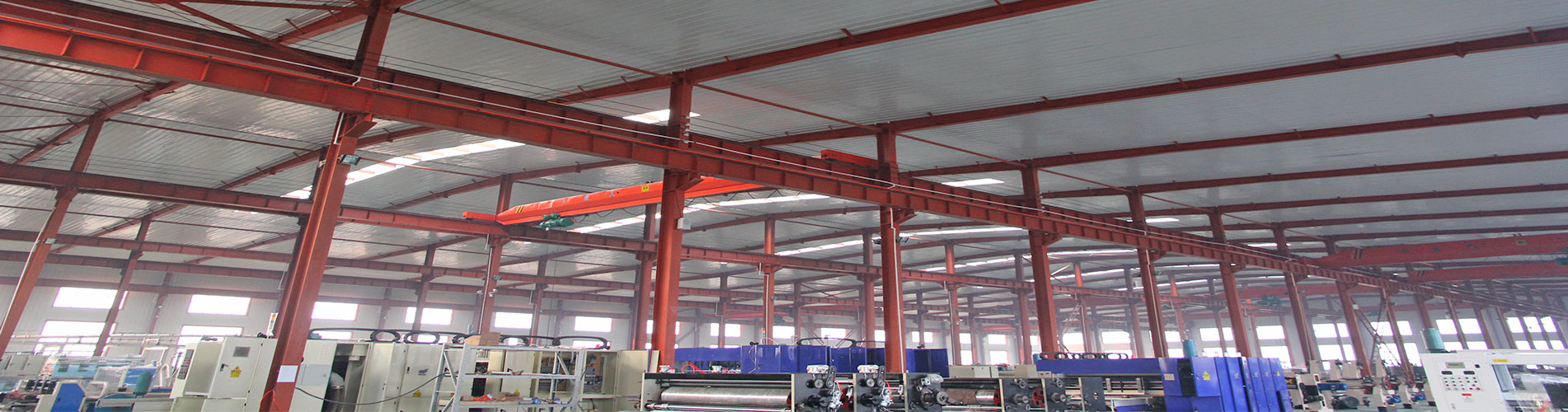

How to make steel structure design more reasonable?
Making a steel structure design "more reasonable" is the core pursuit of structural engineering. It balances safety, economy, constructability, and performance. Here’s a comprehensive guide, moving from fundamental principles to advanced strategies.
Core Philosophy: Reasonable = Safe + Efficient + Buildable
A reasonable design is not just the minimum code-compliant section; it's the optimal solution that harmonizes multiple, often competing, constraints.
1. Foundational Principles for Rational Design
Understand Load Paths: Before any calculation, visualize how every load (gravity, wind, earthquake) travels through beams, columns, bracings, and connections down to the foundation. The simplest, most direct load path is usually the most efficient and robust.
Select the Right Structural System: Match the system to the span, height, and function.
Frames (Moment-Resisting or Braced): For multi-story buildings. Braced frames are generally stiffer and more economical for lateral loads.
Trusses: For long-span roofs or bridges. Ideal when clear space is needed below.
Gridshells / Arches: For large column-free spaces.
Follow "Form Follows Force": The shape of the structure should align with the flow of internal forces (axial tension/compression vs. bending). An arch is a classic example of efficient form for compression.
2. Key Strategies for Optimization & Efficiency
Iterative Design & Comparative Analysis:
Don't settle on the first layout. Develop 2-3 viable schemes (e.g., different column grids, bracing locations, beam depths).
Compare them based on: total steel weight, fabrication complexity, erection sequence, and foundation implications. Often, a slight increase in steel tonnage can save vastly more on fabrication/erection costs.
Member Optimization:
Use Laterally Unsupported Length: Design beams with adequate lateral bracing (by slab or secondary members) to utilize their full bending capacity.
Buckling Considerations: For columns and compression members, effective length is key. Bracing a column at mid-height can dramatically reduce its required size.
Section Selection: Favor compact, rolled sections (I-beams, HSS) for efficiency. Use built-up sections only when necessary. Consider castellated beams for service integration but mind vibration.
Connection Design Philosophy:
Standardize Connections: Using 2-3 standard connection types (simple shear, moment, bracing) throughout dramatically reduces detailing errors, fabrication cost, and erection time.
Design for Ductility: Especially in seismic zones, connections should be the "fuse"—detailed to yield and dissipate energy without brittle fracture (e.g., using RBS - Reduced Beam Section connections).
Constructability: Can it be bolted simply in the field? Is there enough space for the wrench? Can it be erected in logical sequences?
Integration with Other Disciplines (Crucial!):
MEP (Mechanical, Electrical, Plumbing): Coordinate early! Large openings for ducts or clashes with bracing are major cost drivers. Use BIM (Building Information Modeling) for clash detection.
Architecture: Work to align architectural grids with structural bays. Negotiate column locations early.
Fire Protection: Consider the cost and aesthetics of fireproofing (spray, boards, intumescent paint) in the section choice.
3. Utilizing Advanced Tools & Methods
Automated Design & Optimization Software: Modern software (like RISA, ETABS, Robot, SCIA) can:
Perform iterative member sizing against multiple load combinations.
Optimize grid spacing and member selection for minimum weight/deflection.
Perform generative design studies within set constraints.
Performance-Based Design (PBD): Move beyond prescriptive code "box-checking." For complex structures, use advanced analysis (non-linear static/dynamic) to more accurately predict real behavior, often leading to more efficient designs.
BIM & 3D Modeling: Not just for visualization. Enables:
Clash Avoidance: With MEP and architecture.
Digital Fabrication: Direct data transfer to CNC machines for cutting, drilling.
Improved Collaboration: All disciplines work on a single coordinated model.
4. Constructability & Sustainability
Design for Fabrication and Erection:
Consider mill lengths and transportation limits for member sizes.
Break large assemblies into logical, shippable, and erectable pieces.
Include lifting points and temporary bracing in the design.
Design for Deconstruction & Sustainability:
Use bolted connections over welded ones where possible for easier future adaptation or recycling.
Consider the use of higher-strength steels (e.g., ASTM A992 Grade 50) to reduce tonnage.
Evaluate the use of recycled steel and the structure's overall embodied carbon.
Practical Checklist for a More Reasonable Design
Plan: Is the column grid optimal? (Typical economical range: 6m x 9m to 9m x 12m, but varies).
Loads: Have all permanent, variable, wind, seismic, and special loads been considered accurately (not overestimated)?
System: Is the lateral system (braced frame, moment frame, shear wall) the stiffest and simplest option for the building's aspect ratio?
Members: Are sections standardized? Are beams braced for their full capacity? Are columns checked for multiple buckling modes?
Connections: Are they simple, standardized, and constructible? Do they ensure the assumed structural behavior?
Deflection & Vibration: Does it feel right? Check live load deflections (L/360 for floors) and vibration for long-span floors (often the governing criteria, not strength).
Integration: Have MEP clashes been resolved in the model?
Buildability: Can it be made in a shop and put up safely in the field with common equipment?
Common Pitfalls to Avoid
Over-Design: Applying excessive load factors, not utilizing member capacity fully, adding "a little extra" arbitrarily.
Ignoring Lateral Torsional Buckling: For beams without top flange bracing.
Poor Connection Detailing: Creating complex, highly restrained connections that attract unexpected forces.
Neglecting Stability Effects (P-Delta): Especially for slender buildings.
Working in Silos: Finalizing the structural frame before coordinating with MEP runs.
Conclusion: A truly reasonable steel design is the product of engineering judgment, not just software analysis. It requires balancing analytical skills with practical knowledge of fabrication, erection, and cost. The most elegant design is often the simplest, safest, and most straightforward to build, meeting all performance requirements with efficient use of material and labor. Always start with a clear load path and prioritize constructibility from day one.
Категории
последний блог
Теги


Для .Запросы о наших продуктах или прерывании, пожалуйста, оставьте нам, и мы будем на связи в течение 24 Часы.
© авторское право: 2026 Hebei Baofeng Steel Structure CO.,LTD Все права защищены.

IPv6 сеть поддерживается


 +8615720226351